Bone Manipulation | Osteokinesis
Bone Manipulation, also called Osteokinesis, is a fictional superpower allowing users to exercise psychic control over bones both their own and others. This superhuman ability is featured prominently in comics and games, letting individuals manipulate, shape, and generate bone structures at will. As a Sub Power of Body Manipulation and a Variation of Organ Manipulation, it stands distinct from real-world osteopathy, which is simply a manual therapy. What makes this power so compelling for readers exploring the broader catalog of related powers on a superpower wiki or testing out a random superpower generator for a new idea is how it combines raw biology with imaginative combat potential. Users can reinforce their skeleton, grow osteogenic armor for defense, form organic blades or spikes, and even launch bone projectiles as weapons. In advanced cases, they can influence the skeletal structures of other organisms, summoning bare skeletons or controlling them for offense and movement.

This rare ability works as a survival toolkit grounded in the science of osteogenesis, osteoclast activity, and rapid calcification, involving altering bone density and projecting sharp, deadly formations. The defensive resilience of armor and reinforcement pairs perfectly with brutal close-quarters offense, forming a variations-rich system that adapts to any situation whether summoning protective barriers or controlling skeletons for tactical advantage. By including elements like psychic control to roll out instant blades or projectiles, Bone Manipulation becomes more than just a fictional superpower; it transforms into a dynamic force where combat, biology, and imagination intersect, allowing endless creative possibilities for both storytelling and gameplay.
Explore More : Super powers Generator
Bone Manipulation Super Power Generator
Try our free Bone Manipulation Super Power Generator below! Simply choose your power level, select a visual style, and click Generate to create your unique hybrid ability.
Within seconds, you’ll receive a fully generated superpower profile featuring a unique power name, detailed stats, signature abilities, special moves, core power, and even a hidden weakness.
Every result is instantly generated and completely unique, making it perfect for character creation, storytelling, gaming, or just having fun.
Bone Manipulation (Osteokinesis)
Manipulate and weaponize bone structure
Capabilities & Core Abilities
Bone Manipulation (Osteokinesis) represents the extraordinary ability to create, shape, move, control, interact, and manipulate bones the rigid tissue that constitutes a fundamental part of the vertebrate skeleton in animals. Practitioners can influence not only their oneself skeletal structure but also that of others, working with bare skeletons, entire skeletal systems, or isolated fragments. This power extends beyond simple movement, encompassing growing, shaping, and manipulating density and weight while creating complex constructs that serve multiple functions. Advanced users demonstrate mastery over other species, metaphysical entities, and even divine beings‘ bone structures, though ethical and power–cost considerations often limit such applications.
Osteogenic armor plating :
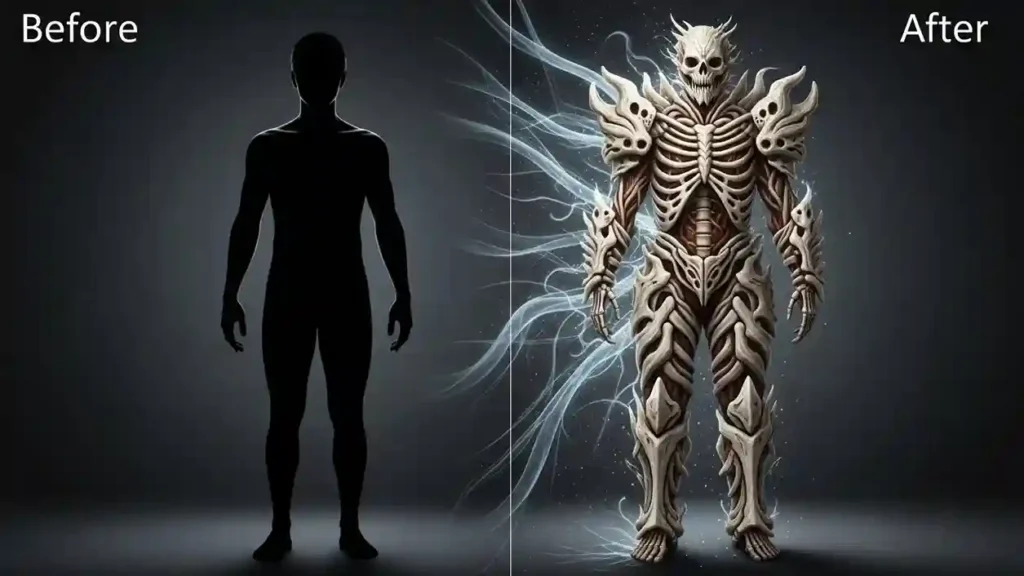
Through accelerating periosteal growth, practitioners bud protective plates, ridges, and exoskeletal segments along the ribs, shoulders, forearms, shins, and back designed for either smooth deflection or ridged surfaces ideal for grappling. Strategic openings are left at joints to preserve mobility during combative encounters.
Organic weapon fabrication :
Common manifestations include extending the ulna and radius into spikes, forming phalangeal claws, serrated forearm blades, or rib–born shields. Users can even produce detachable osteo–projectiles like quills, flechettes, or javelins that regrow after expending biological reserves, useful for brutally attacking or skewering enemies from a distance.
Rapid remodeling and repair :
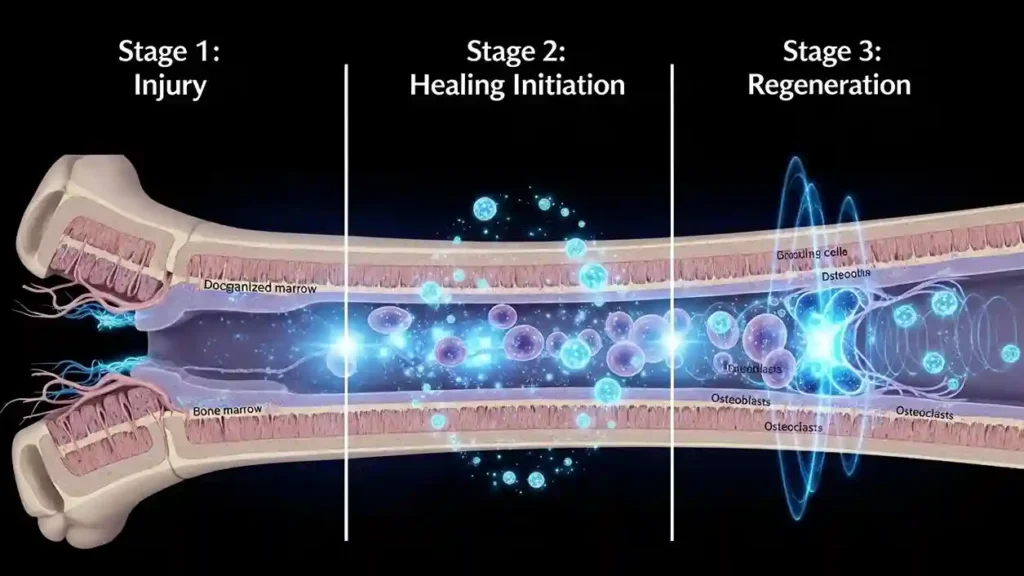
Controlled osteoclast activity allows practitioners to melt and reshape bone on the fly, recalcify broken sections once realigned, and heal faster than normal rates. Misgrown sections are simply reabsorbed and reformed, while unnecessary mass can be reduced to reduce drag and optimize performance.
Morphological tuning for ergonomics:
Hollowed sections enable reduction in overall mass, while thickened stress points provide reinforcement, enabling parkour–style agility and absorption of heavy impacts. Joint geometry can be micro–adjusted to extend reach, alter leverage, or improve stance and stability for superior positioning in combat or athletic purposes.
External osteokinesis archetype :
Beyond the body, controlling remains, fossil fragments, or bone within living targets becomes possible, though enormous capability in most settings restrict this application to specialized scenarios. This turns the environment itself into a weapon, moveing skeletal constructs with precision.
Biochemical optimization in practice :
Expert users manage calcium allocation, vitamin D pathways, and marrow niche preservation to avoid anemia and minimize fatigue. Maintaining a healthy balance between osteogenesis (bone building) and hematopoiesis (blood production) ensures sustained performance without compromising vitality.
Power Levels & Progression
Level 1 — Osteo-Initiate
Bone Manipulation (Osteokinesis) at the beginner stage involves Self–only capabilities focused on small–scale growths like claws, knuckle ridges, and minor plating during short bursts. The duration and cost result in noticeable soreness and calorie drain, while reliability suffers as users are prone to hairline fractures when overused. Most growths remain blunt without practice, limiting effectiveness until technique improves.
Narrative use for street-level hero: This stage suits a rookie combatant learning to balance power with physical consequences, making it ideal for urban vigilante scenarios.
Self-control of minor changes: Beginners manipulate one’s own bones by slightly hardening them or making them protrude as small, blunt points. This typically activates during high–stress moments when discovering skeletal manipulation abilities.
Basic awareness through sensing: Early practitioners develop sensing of their bone structure and perceive a nearby person or creature‘s skeletal framework. This minor influence allows causing mild discomfort or slight instability in another’s skeletal system through touch.
Limited projection capability: Users can attempt firing small, simple bone fragments from the body, though accuracy and power remain minimal at this stage.
Level 2 — Combat-Ready Osteo-Artisan
At this stage, you’re no longer just growing sharp spikes from your hands or back—you’re learning to sustain full-body reinforcement during actual combat. I’ve seen experienced practitioners alternate between agile and tanky builds mid-mission, which requires not just raw power but disciplined retuning of their skeletal system. The bone density you create isn’t static; it’s a profile you can remodel on-the-fly to match offense or defense modes. This limited control over your existing bone structure means you can reinforce specific segments for durability or detach spines as weapons, but the cost is real—you’ll need a high-calcium diet and serious recovery time. Fewer fractures happen when you utilize interlocking armor segments that form across your body, turning yourself into a walking shield. The reliability of this technique comes from understanding how to manipulate marrow properties for personal healing and regeneration, which keeps you in the fight longer.
- Bone Protrusion & Weapon Formation: Growing sharp bones from your hands, back, or any limb gives you instant weapons through protrusion these spikes can fire as sharpened projectiles or stay attached for close-range combat. The speed at which you grow and sharpen these fragments determines whether you’re in offense mode or just creating barriers for defense.
- Armor Hardening & Density Control: Hardening your skeletal system means increased defense through dense bone shields that interlock like armor segments. You can harden a single segment or go for full reinforcement, but each build has a duration limit—sustain it too long and the calcium drain becomes a problem.
- Basic Constructs & External Manipulation: Forming simple shapes like small barriers or spike formations from bare bones requires you to manipulate smaller skeletal systems externally. This use of external control over existing bone constructs lets you create basic defensive shapes or fire bone fragments as projectiles with better accuracy.
- Combat Sustainability & Recovery: Sustained combat at this level requires a high discipline around your diet and recovery calcium intake isn’t optional, and fewer fractures mean you’ve learned to retune your bone density on-the-fly. The narrative here is that an experienced operative knows how to alternate between agile movement and tank-like durability, adjusting their profile mid-mission without breaking down.
- Marrow Utilization & Regeneration: Utilizing bone marrow properties gives you access to personal healing that can regenerate damaged bones faster. This property of marrow becomes critical when you’re firing detachable spines or hardening your body repeatedly the heal rate determines your reliability in extended fights.
Level 3 — Osteo-Master: Wielding the Living Skeleton
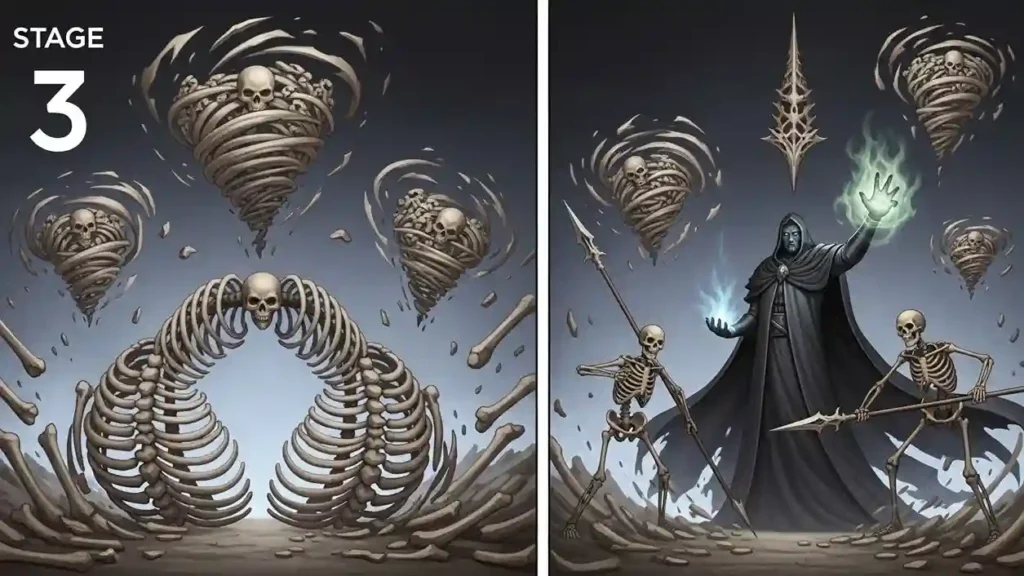
Power Level 3 in bone manipulation marks a significant step where users evolve from basic control and minor internal adjustments into true skeletal architects capable of external osteokinesis with versatile combat applications. Most power-scaling wikis classify this tier as moving beyond simple heal injuries functions to comprehensive battlefield dominance through precision reshaping and rapid regeneration of complex forms.
- Advanced Offensive Projection: Your own bones become weapons as you rapidly grow, shape, and project complex offensive structures like spears, blades, whips, and projectiles—creating sharp spikes that burst through skin for brutal attacks with surgical control over osteoblast building and osteoclast breakdown cycles for near-instant weapon refresh.
- Marrow Regeneration: Tapping into bone marrow’s properties lets you rapidly heal wounds, regrow lost bone, and sustain regenerating bone tissue during Marathon-length engagements with proper preparation, though expect elevated metabolic demands and serious hydration needs.
- Enhanced Defense: Strengthening bones to an immense degree through Density/Weight Alteration allows changing bone hardness and mass for different effects—forming dense shields and full-body armor that manipulate density to create strong defenses against incoming attacks.
- External Bone Control (Basic): This ethically fraught ability grants limited influence over living targets by manipulating skeletons of others, working with dead bone and bare bones to create simple bone constructs, and potentially control others’ skeletons for crowd-level influence as either Apex combatant, battlefield controller, or morally gray antihero.
Combat Applications & Tactical Advantages
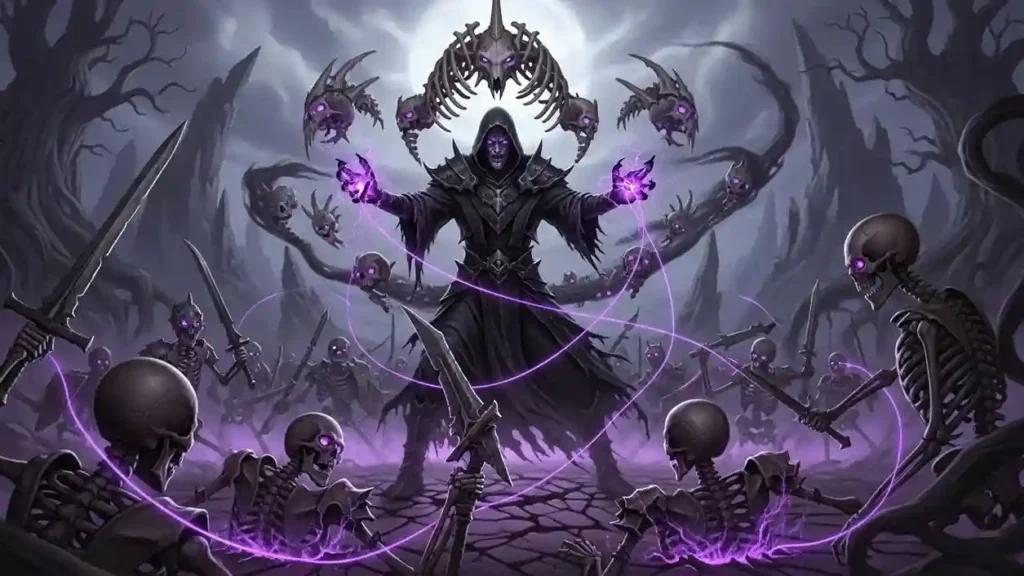
Bone manipulation transforms the human skeleton into a living arsenal, offering unmatched versatility in combat scenarios. Users can adapt their fighting style instantly, creating weapons from their own body while maintaining superior defensive capabilities. This power excels in both close-quarters combat and ranged engagements, making it one of the most adaptive abilities in battle.
Offensive Capabilities
The offensive potential of osteokinesis lies in its ability to generate weapons instantly without relying on external equipment. Users can project bone spikes, blades, and spears directly from their skeleton, catching opponents off-guard with attacks that emerge from unexpected angles.
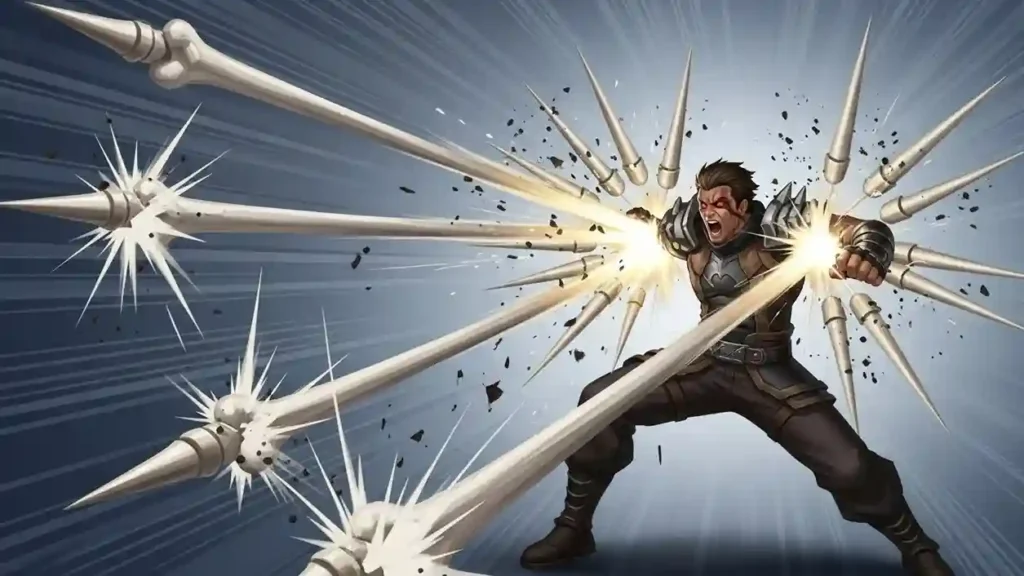
Bone Projectile Attacks allow users to launch sharpened bone fragments at high velocity, functioning as natural bullets or arrows. These projectiles can penetrate armor and strike multiple targets simultaneously, making them effective against groups of enemies.
Close-Combat Weapon Formation enables the creation of swords, claws, hammers, or any melee weapon directly from bones. These weapons are as hard as steel when properly reinforced and can be reshaped mid-battle to counter different fighting styles.
Piercing Strikes involve extending bone spikes from knuckles, elbows, or knees during punches and strikes, dramatically increasing impact damage. A single punch can become a lethal stabbing attack without telegraphing the weapon beforehand.
Defensive Tactics
Bone manipulation provides exceptional defensive options that most powers cannot replicate. The ability to create instant armor makes users incredibly difficult to injure or incapacitate.
Skeletal Armor Plating involves expanding and hardening bones to form protective layers across vital areas. This organic armor can absorb tremendous impact, deflecting blades and even bullets depending on the user’s mastery level.
Reactive Defense Shields can be erected instantaneously when attacks are detected. Users project bone walls or domes from the ground or their own body, creating barriers that protect against explosions, projectiles, and energy attacks.
Decoy Bone Structures allow advanced users to create skeletal constructs that distract enemies or absorb attacks meant for the user, functioning as disposable shields or diversion tactics.
Mobility & Tactical Movement
Beyond offense and defense, bone manipulation enhances battlefield mobility in creative ways that give users significant tactical advantages.
Bone Stilts and Extensions can be grown from legs to increase stride length and running speed, or to navigate difficult terrain like swamps or debris fields where normal movement would be impossible.
Climbing and Traversal becomes effortless when users can project bone spikes from hands and feet, turning any surface into a climbable wall. This allows access to high ground and vertical escape routes.
Skeletal Wings or Gliding Frames represent advanced applications where users create bone frameworks that enable gliding or limited flight when combined with momentum or environmental factors.
Crowd Control & Area Denial
Bone manipulation excels at controlling the battlefield by restricting enemy movement and creating hazardous zones.
Bone Spike Fields can be erected rapidly across large areas, creating no-go zones that impale or trap enemies. This technique is particularly effective for defending positions or funneling opponents into kill zones.
Bone Cage Imprisonment allows users to trap enemies within skeletal prisons that emerge from the ground or wrap around targets. These cages are difficult to break and buy valuable time in combat.
Environmental Fortification involves reinforcing structures or creating defensive positions using externally controlled bone material, transforming any location into a fortified stronghold.
Psychological Warfare
The visual horror of bone manipulation cannot be understated as a tactical advantage. The sight of bones erupting from skin or skeletons rising from the ground triggers primal fear responses.
Intimidation Factor causes hesitation and panic in opponents who witness bones piercing through flesh without apparent pain. This psychological edge often wins fights before physical combat even begins.
Unpredictability keeps enemies off-balance since bone weapons can emerge from any part of the user’s body at any angle, making defensive positioning nearly impossible for opponents.
Body Horror Tactics involve creating grotesque skeletal formations or animated bone constructs that disturb and distract enemies, exploiting the universal discomfort humans feel toward exposed bones and skeletons.
Combat Adaptability
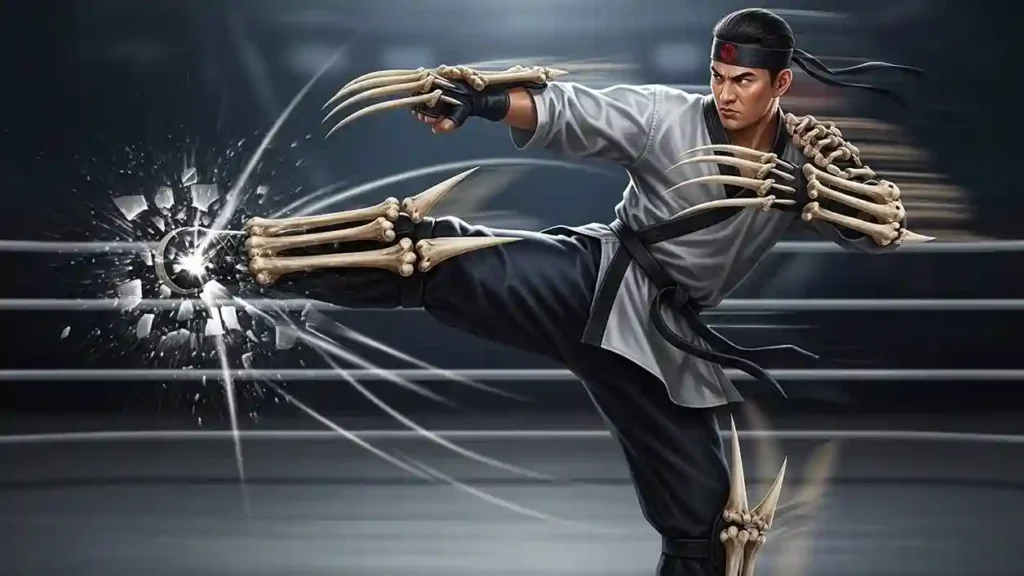
The true power of bone manipulation lies in its adaptability to any combat situation, making users extremely difficult to counter.
Weapon Switching happens instantly users can transform a sword into a spear or shift from ranged to melee combat without losing momentum. This fluidity makes it nearly impossible for opponents to develop effective counter-strategies.
Injury Compensation means that even when injured, users can reinforce damaged areas or create prosthetic bone structures to maintain combat effectiveness despite wounds that would incapacitate normal fighters.
Environmental Exploitation allows users to absorb calcium from their surroundings—bones, rocks, or even calcium-rich soil—to replenish their reserves during extended battles, ensuring they rarely run out of ammunition.
The combination of these tactical advantages makes bone manipulation one of the most formidable powers in close to mid-range combat, offering solutions to nearly every battlefield challenge.
Advanced Techniques & Variations

Bone Manipulation (Osteokinesis) reaches extraordinary heights when Advanced users perform a wide range of sophisticated maneuvers, blending offense, defense, and utility into seamless execution.
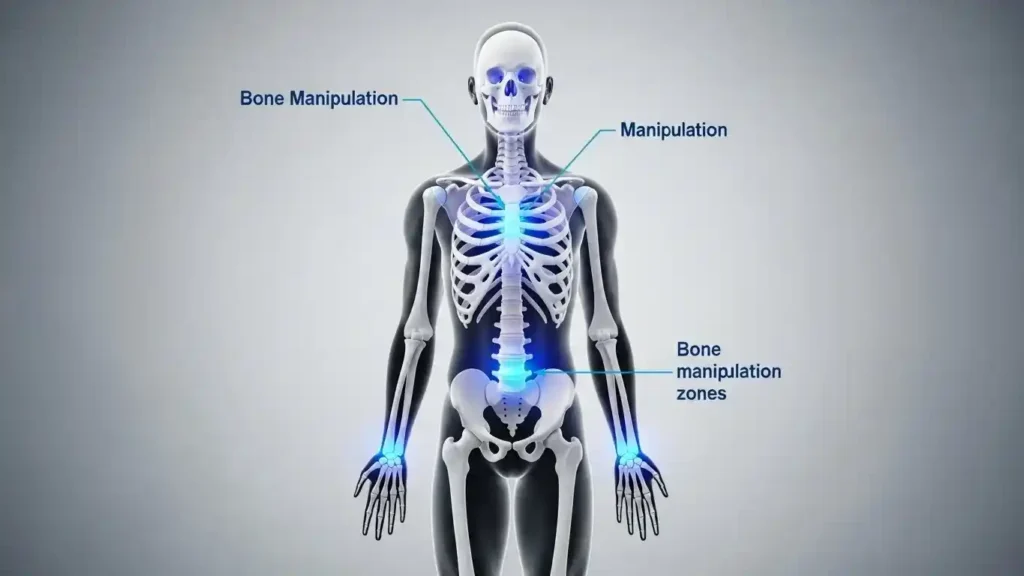
- Internal Augmentation: Manipulating one’s own bones delivers enhanced physical prowess by increasing bone density for near-invulnerability or decreasing it to increase agility and speed during combat.
- Osteokinetic Combat: Seamlessly integrating bone manipulation into hand-to-hand combat transforms hardened skeletal extensions into natural, nearly indestructible weapons as claws and blades protrude through skin.
- Prehensile Bones: Gaining independent control over skeletal segments allowing them to move flexibly like an additional limb or tentacle for grasping, offensive whipping motions, and entangling opponents.
- Motor–Skill Manipulation: Affecting an opponent’s nervous and skeletal systems to disrupt their motor skills, causing paralysis or involuntary movements by manipulating their internal bone structure.
- Ossification: This highly advanced technique involves turning creatures or objects into solid bone form through organic transmutation, effectively petrifying targets permanently.
- Electricity Generation: Compressing bone structures to generate electricity by leveraging the body’s natural piezoelectric properties found within skeletal tissue.
- Osteokinetic Constructs: Creating complex, functional items from architectural structures to living entities using bone mass from simple weapons like swords and whips to fortifications and barriers.
- Fossil Manipulation: A specific variation where the user can manipulate fossils and ancient remains, potentially controlling massive frameworks on a geological scale.
- Bone Magic or Osteomancy: Utilizing osteokinesis in a magical context for spell casting, divination, and arcane applications that transcend physical limitations.
- Elemental Infusion: Combining elemental powers with bone control, such as Flaming Bone Manipulation where constructs are generated with fire properties.
- Dermal Armor: Creating a thin yet durable layer of bone beneath the skin to act as invisible armor, providing robust defense against incoming attacks.
- Bone Spike Projection: The most common application, involving rapidly protruding or firing spikes, shards, and projectiles from any body surface.
- Ten–Finger Drilling Bullets: Precision projectile techniques combining rotation with hardened fingertip protrusions for armor-piercing capabilities.
- Biological Apex: The peak achievement where osteokinesis can fall under the umbrella of Biological Manipulation and Anatomical Arts, allowing users to create entire life forms, reconstruct bodies at the cellular level, and manipulate associated substances like blood, marrow, and muscle tissue.
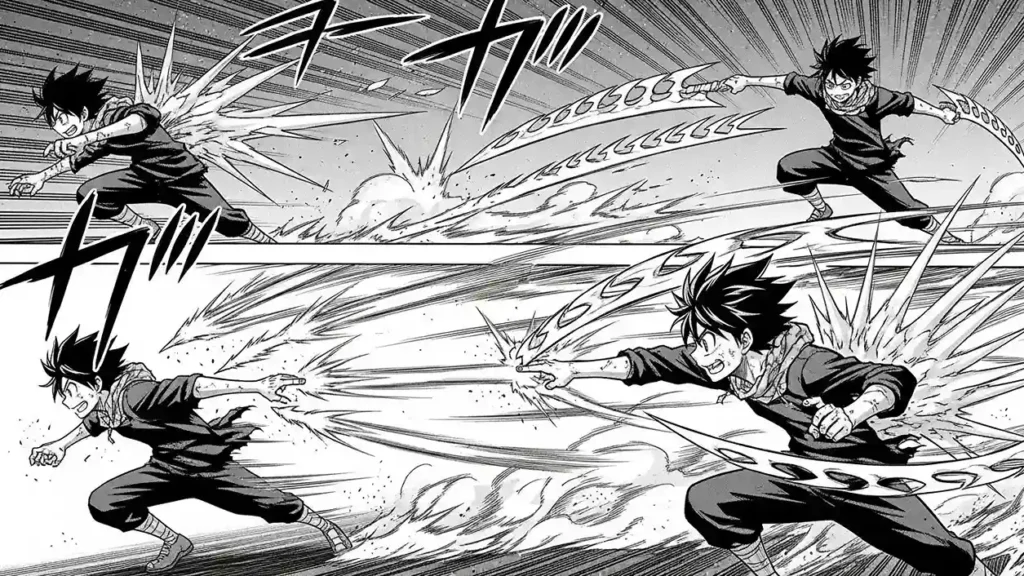
Limitations & Drawbacks
Bone Manipulation (Osteokinesis) comes with significant drawbacks that make it far from an effortless ability, and anyone exploring this power quickly realizes the toll it takes on both mind and body.
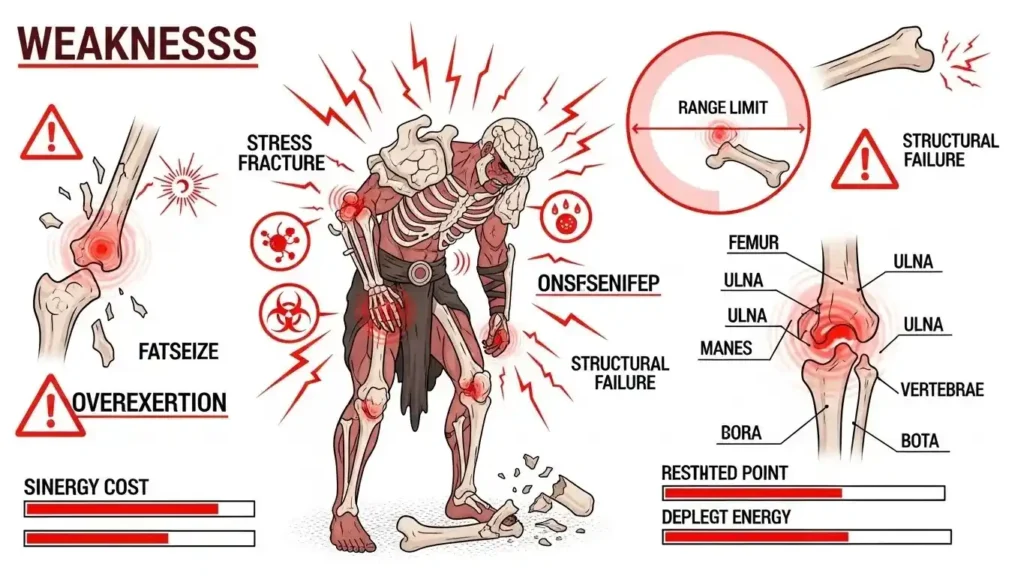
- Intense pain strikes as the most immediate challenge manipulating bones by growing, breaking, or reshaping them is extremely painful for both the user and the target, demanding high pain tolerance just to function. Physical strain builds rapidly during use, leading to severe fatigue as the body struggles to manage the manipulation and regeneration processes simultaneously. Overuse pushes practitioners into physical exhaustion, draining energy reserves until even basic movements become difficult.
- The self-injury risk cannot be ignored either forcing bones outward through the skin causes skin tearing, leaving visible wounds and scars, while excessive density changes weaken bone structure over time, creating brittle bones that snap under pressure. Severe pain persists throughout, making every session mentally taxing and physically taxing in equal measure, requiring immense control and focus just to avoid catastrophic mistakes.
- Range restrictions severely limit practical applications, as most practitioners find themselves confined to self-manipulation or needing direct physical contact with another person’s bones to exert control distance work remains nearly impossible without advanced mastery. Material dependency creates another frustrating barrier, since effective use often requires pre-existing bone sources like bone dust, fragments, or other specific materials nearby to manipulate effectively, and without these resources, the ability falters.
- Living tissue poses its own complications, as working with organic bones embedded in flesh demands far more precision than handling dead matter. Control intensity escalates quickly when dealing with complex structures like the spine or ribcage, where extreme focus becomes essential to avoid failing under stress or in a chaotic situation.
- Range limitations mean enemies can simply stay beyond contact distance to neutralize the threat entirely, while bone-negating abilities or overwhelming force can counter the manipulation outright, leaving the user vulnerable. The struggle to maintain control over multiple targets simultaneously drains concentration, and even minor distractions can cause the power to collapse tear skin, weak joints, and self-injury become real dangers when precision slips, proving that Osteokinesis demands respect and caution at every turn.
Weaknesses Against Other Superpowers
1. Speed-Based Overwhelm (Speedsters)
Speedsters exploit reaction-time limits by attacking before bone manipulation can activate. They easily evade bone creation, melee extensions, and projected bone shards, nullifying setup-dependent combat styles.
2. Energy Manipulation Bypass
Energy-based attacks (e.g., electricity) ignore physical defenses entirely. Osteo-armor, regardless of density or layering, offers no resistance to non-physical energy transmission.
3. Psionics and Mental Targeting
Psionic powers attack cognition and neural function rather than physical structure. Bone constructs and mineralized defenses are irrelevant against mind-focused manipulation.
4. Acid and Corrosion Manipulation
Corrosive forces dissolve bone armor rapidly, destabilize structural integrity, and cause self-harm as melting spikes and plates damage surrounding flesh during degradation.
5. Vibration and Sonic Resonance
Sonic and vibrational frequencies induce microfractures via resonance. Brittle bone constructs shatter internally, making even reinforced armor structurally unstable.
6. Cryokinesis-Induced Brittleness
Extreme cold increases bone brittleness. Frozen plates crack easily upon impact, reducing both defensive reliability and offensive striking power.
7. Telekinesis and Force Projection
These abilities maintain distance control, preventing melee engagement. Users are rag-dolled, restrained, or suspended, eliminating practical use of bone-based combat.
8. Gravity Manipulation
Gravity-based powers immobilize or crush joints and skeletal connections, rendering structural enhancements ineffective under massive force compression.
9. Molecular Destabilization and Disintegration
Atomic-level manipulation bypasses material durability entirely. Bone density and composition become irrelevant when matter is altered or erased at the molecular scale.
10. Phasing and Intangibility
Intangible targets ignore all physical barriers. Bone constructs, spikes, and armor provide zero interaction or containment capability.
11. Area-of-Effect (AoE) Blasts
Wide-range heat and concussive force overwhelm localized armor. The entire skeletal system is impacted simultaneously, exceeding reinforcement limits.
12. Hemokinesis (Blood Control)
Blood manipulation targets soft tissue systems—circulatory and muscular—bypassing skeletal protection and reducing the effectiveness of exoskeletal defenses.
13. Self-Inflicted Physical Strain
Bone generation causes intense pain from forcing bones through skin, breaking them for weapons, or manipulating marrow. High pain tolerance becomes mandatory without enhanced regeneration or accelerated healing.
14. Biological Limitations and Marrow Risk
Complex manipulation of bone marrow risks disrupting cell production. This introduces long-term biological consequences beyond immediate combat injury.
15. Limited Scope of Influence
The power primarily affects the user’s own skeleton. Without external bone manipulation or creation, effectiveness is severely restricted.
16. Ineffectiveness Against Non-Biological Targets
Robots, elementals, and bone-less entities are immune. Intangible foes further negate all skeletal-based interactions.
17. Dependency on External Bone Sources
Unless capable of generating new bone matter, reliance on environmental or enemy bones creates situational dependency and reduces self-sufficiency.
18. Defensive Counter-Strategy: Density Reinforcement
Increasing bone density in a Facebreaker-style approach enhances durability, prioritizing defense over fragile weaponized extensions.
19. Power Synergy and Bone Magic Integration
Combining bone manipulation with bone magic enables broader effects, compensating for narrow mechanical limitations.
20. Regeneration as a Survival Requirement
Rapid tissue regeneration and wound sealing are essential to counter Body Manipulators and mitigate continuous self-damage.
21. Matter Manipulation Escalation
Against Matter Manipulators, standard osteo-armor fails. Augmented abilities are required to control a massive skeleton simultaneously as weapon and shield.
22. Cognitive Load and Structural Control
Effective combat requires managing joint control, shard projection, and dense armor formation at once—especially under brittle conditions—making focus and mental endurance critical.
Synergistic Power Combinations
- Regeneration and Accelerated Healing handle wear and tear from frequent remodeling, as healing speeds up recovery after high-stress maneuvers where osteogenesis offsets damage
- Biokinesis grants fine control over mineral balance, collagen alignment, and marrow protection for stronger, safer bone structures
- Density Control via Hardening tunes bone microstructure to resist cutting and torsion without sacrificing toughness
- Telekinesis at micro-scale guides bone projectiles mid-flight, stabilizes quill trajectories, and adjusts dispersion patterns
- Pain Suppression with Adrenal Control maintains clarity during reshaping and reduces stun from sudden growth pains
- Metal and Mineral Manipulation integrates trace minerals like silica and carbon into hybrid composites that reinforces edges on osteo-blades
- Reflex Enhancement pairs perfectly with Precognition so blades and armor appear instantly, enabling predictive counters
- Geokinesis supports Calcium Carbonate Sourcing to draw environmental calcium for fuel in large builds when diet or stores run low
Famous Users (Characters)

- Alex Mercer from Prototype uses bone and biomass manipulation to create claws and armor.
- Kimimaro from Naruto is the quintessential user of this ability, using his Shikotsumyaku (Macabre Bone Pulse) Kekkei Genkai to manipulate his bone density and structure to grow swords, spears, and drill-bullets from his body.
- Kaguya Ōtsutsuki, the progenitor of chakra, wields her bones as a lethal weapon through All-Killing Ash Bones that cause instant disintegration on contact.
- Zenon Zogratis from Black Clover uses advanced Bone Magic to create massive amounts of sharp bone spikes that impale enemies.
- Muzan Kibutsuji from Demon Slayer alters his body structure by growing bladed bone protrusions during combat.
- Kars from JoJo’s Bizarre Adventure Part II: Battle Tendency attacks with Light Slip Blades—bladed bone-like appendages from his arms.
- Giselle Gewelle from Bleach manipulates bones through her Dancing Dead Boys Club technique.
- All For One from My Hero Academia fires Spearlike Bones that shoot bone spikes from his limbs.
- Marrow (Sarah) from Marvel Comics is a mutant who can grow bones uncontrollably through her skin, forming knives, clubs, or armor.
- Spyke (Evan Daniels) from X-Men Evolution generates bone spikes and plating from his body.
- Doomsday from DC Comics has bone-like protrusions that grow through his skin for massive durability and offensive capability.
- Marquis from Worm/Ward is a powerful villain who can control bone, forcing bones out and manipulating bones of others.
- Nico di Angelo from the Percy Jackson series, son of Hades, has the power to summon and telekinetically control skeletons and bones.
- Hades from the Riordanverse, the god of the dead, has absolute command over bone manipulation.
- Sans and Papyrus from Undertale use bone-based attacks in combat.
- Necromancers from the Diablo Series cast bone-themed magic like Bone Spear and Bone Armor.
- Baraka from Mortal Kombat grows large blades from his forearms.
- Dry Bones from the Super Mario Series can reassemble their bones.

Bone Manipulation vs Other Powers
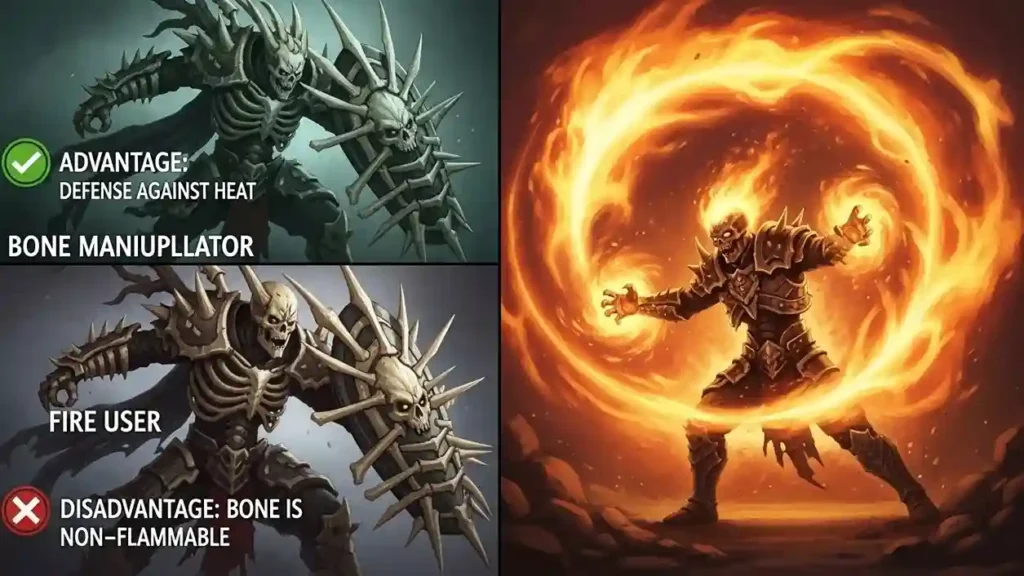
vs Metal Manipulation
- Disadvantage: Metal is denser and stronger than bone in direct clashes
- Advantage: Bones regenerate naturally; metal users need external sources
- Outcome: Range favors metal; close combat favors bone users
vs Regeneration/Healing Factor
- Advantage: Bone users can create weapons while healers only recover
- Disadvantage: Healers outlast bone users in endurance battles
- Outcome: Offensive pressure determines the winner
vs Super Strength
- Advantage: Bone armor absorbs impact; weapons counter raw force
- Disadvantage: Overwhelming strength can shatter bone defenses
- Outcome: Technique beats strength if bone user maintains distance
vs Fire Manipulation
- Advantage: Bones don’t burn easily; armor provides heat resistance
- Disadvantage: Extreme heat weakens bone structure and causes calcium breakdown
- Outcome: Fire users dominate at range; bone users must close distance quickly
vs Ice Manipulation
- Advantage: Bone weapons can shatter ice constructs
- Disadvantage: Cold slows bone regeneration and makes bones brittle
- Outcome: Environmental control gives ice users the edge
vs Telekinesis
- Advantage: Bone weapons are part of the body, harder to manipulate externally
- Disadvantage: Telekinetics can control bone projectiles after launch
- Outcome: Mental strength vs physical control—highly situational
vs Earth Manipulation
- Advantage: Bone users are more mobile and versatile
- Disadvantage: Earth users control calcium in the environment, limiting resources
- Outcome: Terrain decides—open areas favor bone users, rocky terrain favors earth users
vs Electricity Manipulation
- Advantage: Bone is a poor conductor when dry
- Disadvantage: Bone marrow and body moisture conduct electricity
- Outcome: Electric users have advantage in wet conditions
vs Shadow/Darkness Manipulation
- Advantage: Physical bone attacks work regardless of light conditions
- Disadvantage: Shadow users can hide and avoid direct confrontation
- Outcome: Bone users need detection skills to counter stealth tactics
FAQ’s