
Demon Slayer Flame Breathing Guide: The Art of Fire and Resolve
In Demon Slayer, few techniques shine as brightly as Flame Breathing. This powerful Breathing Style is built on raw force, discipline, and passion. It is often confused with Fire Breathing, but the two are not the same. In fact, the pronunciation of Fire Breathing sounds identical to Sun Breathing, also known as Hinokami Kagura, which connects directly to the origins of all breathing techniques.
The world of Demon Slayer: Kimetsu no Yaiba presents breathing styles not just as combat systems, but as reflections of personality. Among them, Flame Breathing stands tall as a pure offensive style, focused on high-damage burst, strong forward pressure, and overwhelming presence in battle.
Animated beautifully by Ufotable, especially in Demon Slayer: Kimetsu no Yaiba – The Movie: Mugen Train, this style became part of the highest-grossing Japanese movie release in history. The Mugen Train Arc and later the Hashira Training Arc deepened its legacy through both anime canon and manga canon, while showing subtle adaptation difference moments.
Origins: Born from the Sengoku Flames
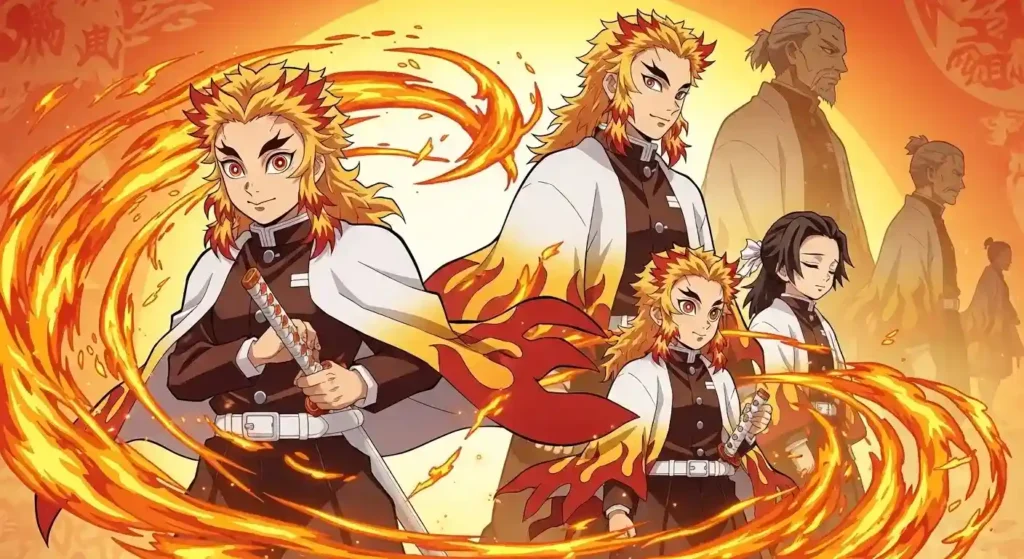
The roots of Flame Breathing go back to the Sengoku period, when Yoriichi Tsugikuni created Sun Breathing. Not every member of the demon slayer corps could master it. So alternative styles were developed, forming personalized branches.
One such branch became the proud legacy of the Rengoku family.
This lineage created the tradition of the Flame Hashira, forming a powerful Hashira title lineage that lasted generations. The Flame Hashira Chronicles hint that there were 21 Flame Hashira before the modern era. Their symbolic Kaen-pattern haori became proof of this slayer tradition and inherited technique.
This was more than training. It was lineage-based power.
The Philosophy of Flame
Unlike Water Breathing, which emphasizes flow, or Sound Breathing, which uses rhythm and explosions, Flame Breathing is direct. It depends on:
- Perfect breathing rhythm
- Strong oxygen control
- Focused breathing concentration
- Sharp swordsmanship
- Mastery of the nichirin blade
Each attack uses flame visualization, creating orange-and-goldish yellow flames around the blade. This is not real fire but an aura manifestation of spiritual energy. Still, its burning impact feels real enough to demons facing demon eradication.
The style reflects passion symbolism, discipline, and unstoppable battle momentum.
All Known Forms of Flame Breathing
There are nine forms. However, the Sixth Form (unknown), Seventh Form (unknown), and Eighth Form (unknown) were never shown.
Let’s explore the confirmed techniques.
First Form – Unknowing Fire
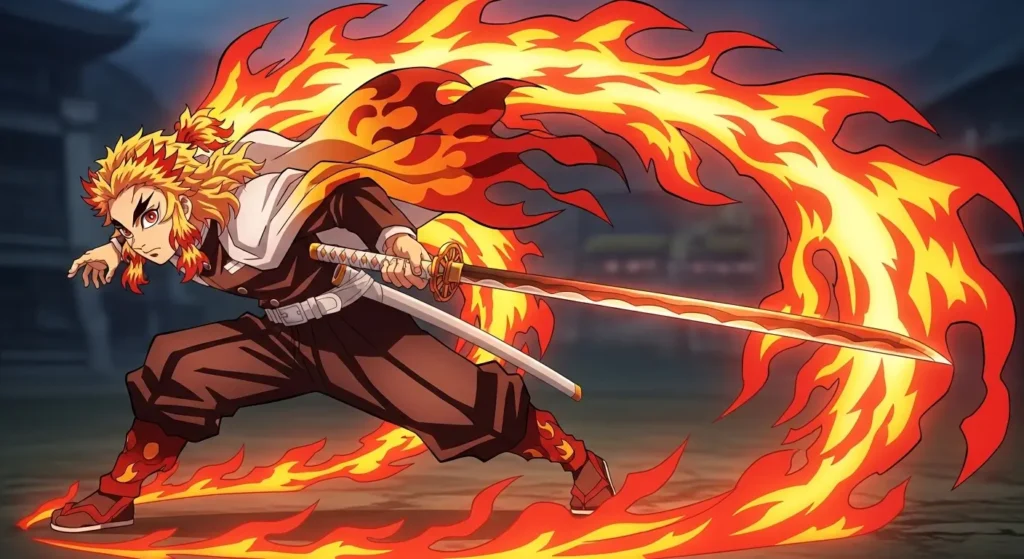
(Ichi no Kata: Shiranui) – Chapter 54
The most basic technique, yet deadly.
- A high-speed dash
- A clean singular horizontal slash
- A precise beheading strike
- Perfect decapitation
It begins from a strong combat stance, usually a high stance, and ends with a decisive finishing blow. Its attack trajectory is simple but effective.
Manga debut: Chapter 54
Anime debut: Demon Slayer: Kimetsu no Yaiba – The Movie: Mugen Train
Second Form – Rising Scorching Sun
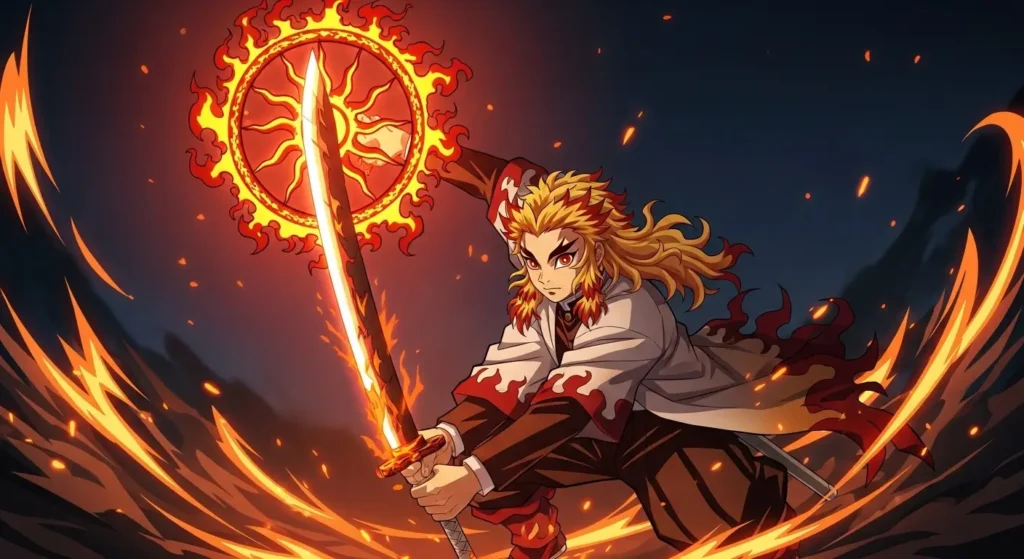
(Ni no Kata: Nobori En Ten) – Chapter 63
A powerful vertical slash rising in an upward arc, usually from a tail guard. The flames spin like a flaming wheel.
It’s perfect for countering airborne threats and maintaining battle momentum.
Third Form – Blazing Universe
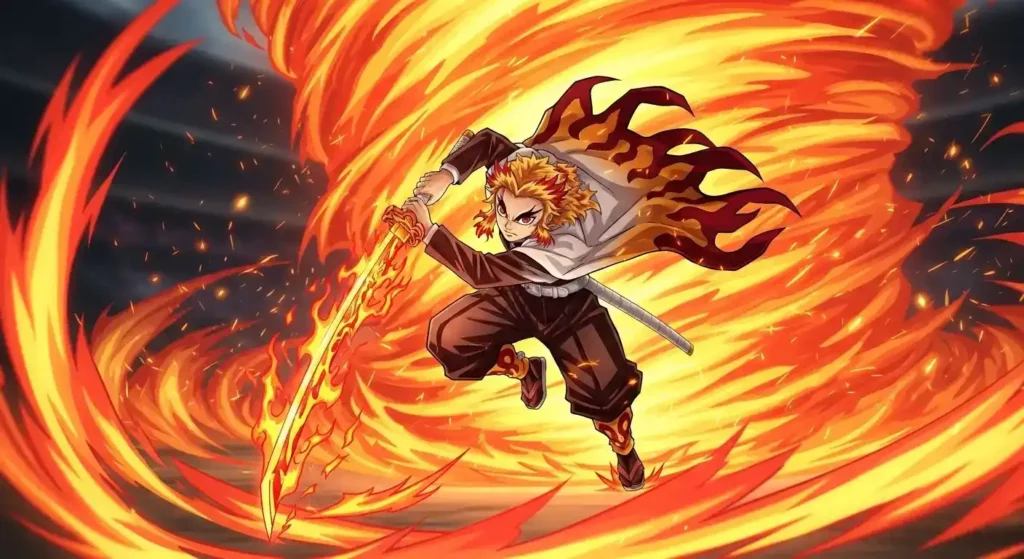
(San no Kata: Kien Banshō) – Anime-original addition
This downward slash from a high guard creates massive flames around the sword. It never appeared in the manga, making it an anime-original addition by Ufotable.
Despite the adaptation difference, it fits seamlessly into the manga canon power system.
Fourth Form – Blooming Flame Undulation
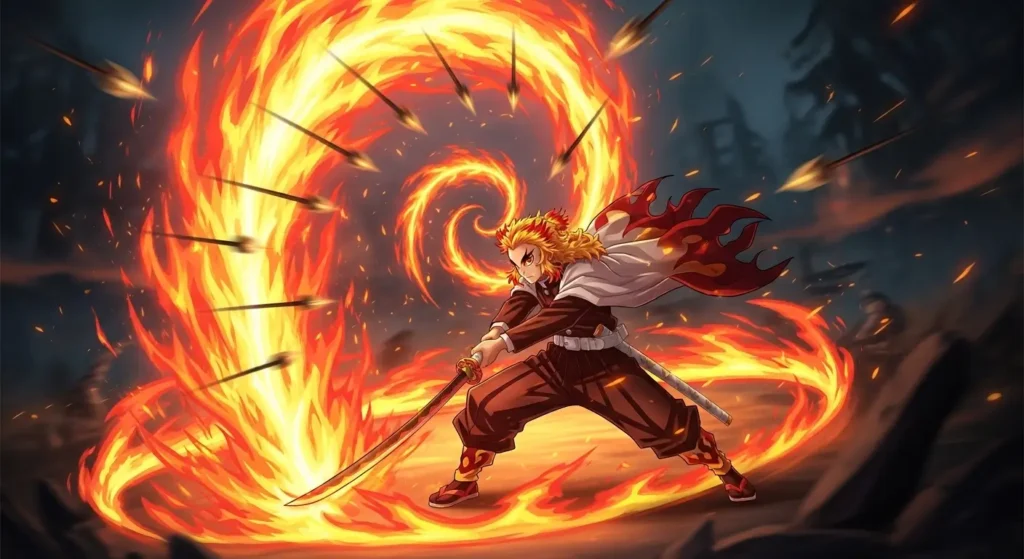
(Shi no Kata: Sei En no Uneri) – Chapter 63
This form combines offense and defense.
- Rapid multiple slashes
- A rotating spinning blade technique
- Effective projectile deflection
- Strong long-range defense
- Deadly close-range combat
The flames form a spiraling wall of fire, acting as both shield and sword. This technique is known for its smooth defensive spin.
Fifth Form – Flame Tiger
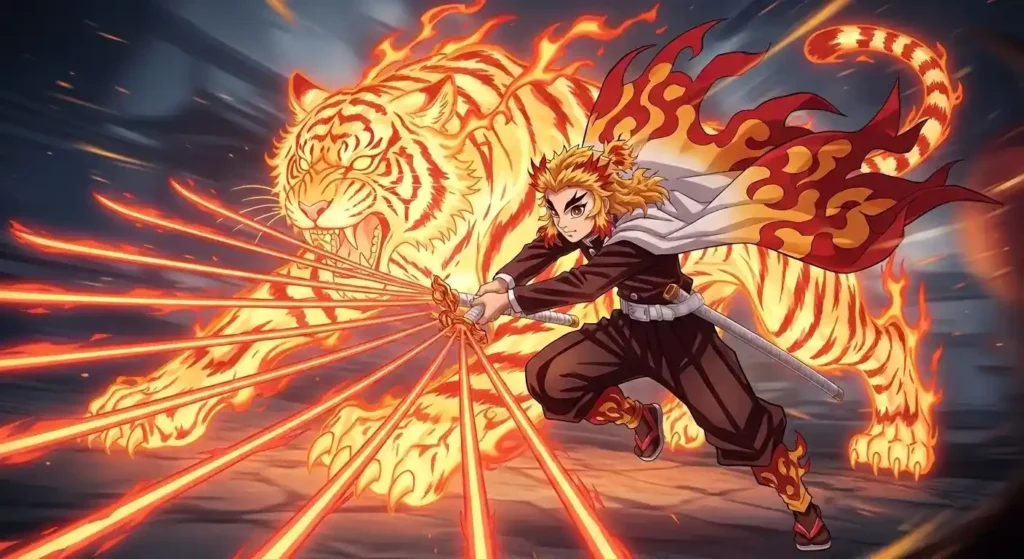
(Go no Kata: Enko)
A rapid fiery charge where flames shape into a flaming tiger, showcasing strong mythical beast imagery and a clear tiger motif.
It overwhelms enemies with:
- Successive strikes
- Heavy burst damage
- Strong combo finisher
In games, Flame Tiger: Fiery Roar expands this into a larger area-of-effect damage attack.
Ninth Form – Ninth Form: Rengoku
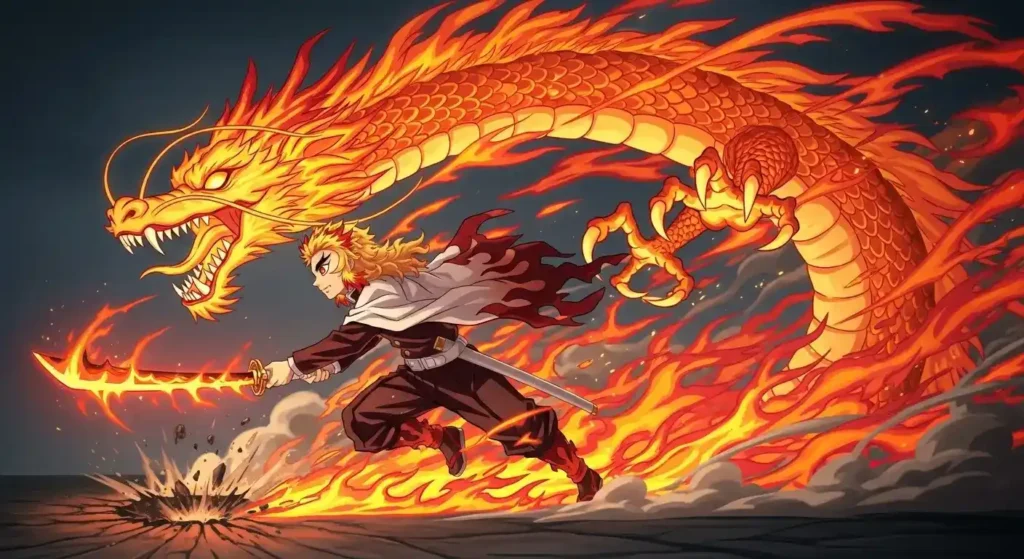
(Ku no Kata: Rengoku) – also called Purgatory – Chapter 64
This is an Esoteric Art or Hiden, passed only within the Rengoku family.
It begins from a solid high stance, followed by a blinding dash and a single devastating slash. The flames shape into a flaming Japanese dragon, representing the dragon motif.
The impact can:
- Create a massive fiery tornado
- Cause extreme crater impact
- Leave a deep crater
- Demonstrate unmatched destructive capacity
It is the style’s true ultimate move.
Collaboration Techniques
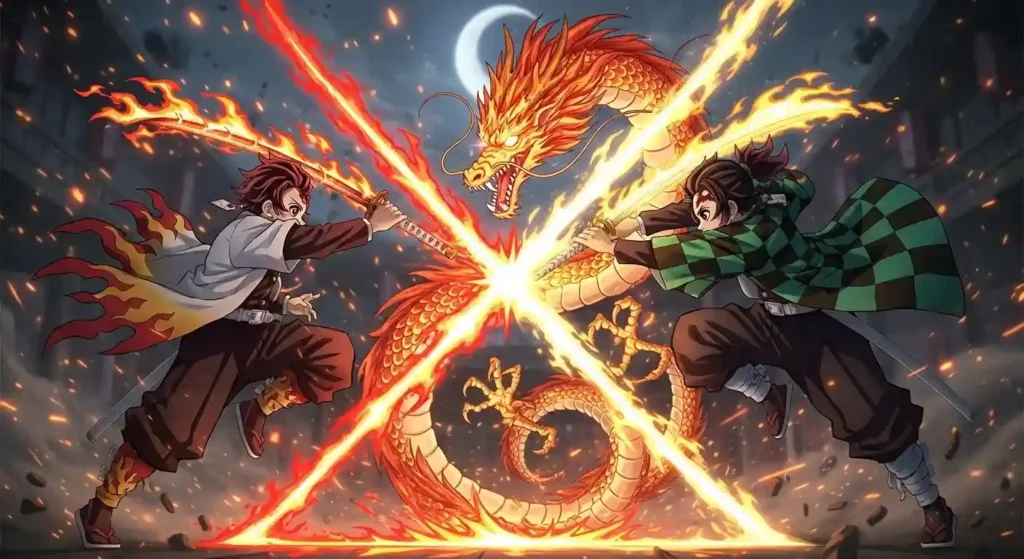
Flame Breathing also appears in a collaboration attack format.
- Hearts Ablaze: Used alongside Sun Halo Dragon Head Dance, combining flames into a joint X-shaped slash.
- Fervent Fulmination: Performed with Sound Breathing, mixing blades with explosive beads for a final fireworks explosion.
- In Kimetsu Academy, Enthusiastic Educator shows a humorous side, where a passionate History teacher creates chalkboard flames.
These demonstrate powerful explosive coordination.
The Battle That Defined Flame
The most iconic use of Ninth Form: Rengoku happened against Akaza, the Upper Rank Three of the Twelve Kizuki, serving under the Demon King, Muzan Kibutsuji.
Akaza, formerly Hakuji, was an upper moon demon with terrifying regeneration ability.
Despite incredible power scaling, unmatched heroic resolve, and a risky sunlight strategy, the battle ended in a heroic sacrifice.
The technique left a massive crater, but Akaza survived due to his regeneration. This fight became one of the most emotional high-octane fight scene moments in anime history.
As one demon said, it felt like a blue sky in summer quote moment—pure and refreshing.
Flame Breathing in Games
In Demonfall and RPG 2, this style supports an aggressive gameplay approach.
Common details include:
- Trainer location at White Peak or Autumn Forest
- Level 15 to Level 300 leveling requirement
- Items like demon horns and axe demon collar
- Fights against Abnormal Demon, Susamaru, or Axe Demon
Gameplay traits:
- Strong guardbreaker
- Powerful counter
- Ideal boss raid strategy
- Useful in PvP counterplay
- Popular game meta build
- Focus on aggressive playstyle
- Emphasis on heavy hits, not long combos
Themes and Symbolism
Flame Breathing is more than fire. It represents:
- Protection of humanity
- Strong heroic resolve
- Emotional depth rooted in tragic backstory
- Commitment to the final battle
It connects visually through:
- Flame manifestation
- Clear heat aura
- Intense cinematic animation
- Stunning animation spectacle
Even the gap between Fifth and Ninth Form adds mystery, reinforcing the incomplete legacy after the fall of its greatest elite swordsman.
Final Thoughts
In the end, Flame Breathing stands as a symbol of strength and spirit within Demon Slayer. From the Sengoku period to the Mugen Train Arc, from disciplined breathing concentration to unstoppable momentum-based strike, it remains one of the most powerful and emotional techniques in anime.
It may not have defeated an upper moon demon, but its fire continues to burn in the hearts of fans.
That is the true meaning of fire element mastery.
