Demon Slayer Water Breathing Forms – The Art of Flowing Power
When people talk about Demon Slayer: Kimetsu no Yaiba, they often praise the animation, the emotion, and the battles. But beneath the beauty of the Demon Slayer anime and the depth of the Demon Slayer manga, there is a system of combat built on discipline and breath.
Among all styles used by the Demon Slayer Corps, none is as elegant and widely practiced as Water Breathing.
This guide explores the complete journey of this powerful Breathing Style—its history, philosophy, users, and all 11 forms—from a fresh perspective that connects technique with meaning, much like the disciplined evolution seen in Thunder Breathing.
Water Breathing techniques Generator
Water Breathing Forms
Create Water Breathing techniques
The Birth of a Flowing Legacy
To understand Water Breathing, we must go back to the Sengoku Period. During that era, the legendary swordsman Yoriichi Tsugikuni created Sun Breathing, the original form from which all others descend.
Not every warrior could master Sun Breathing. One of Yoriichi’s students lacked the natural talent required. Instead of giving up, he adapted the foundation into something new — a personalized style that later became Water Breathing.
This shift represents the heart of the style: adaptability.
Unlike explosive techniques, Water Breathing emphasizes:
- Fluid movement
- Momentum generation
- Tactical control
- Balanced offensive technique and defensive technique
It became known as the most beginner-friendly breathing style, yet it holds power strong enough to rival even Upper Rank demons when mastered.
The Teachers and Their Students
No discussion is complete without Sakonji Urokodaki, the masked cultivator who shaped modern Water Breathing.
Wearing a symbolic Zuiun’nami kimono, he trained:
- Tanjiro Kamado
- Giyu Tomioka
- Sabito
- Makomo
Later practitioners include Murata and Aoi Kanzaki.
Training under Urokodaki involves brutal survival drills, meditation, and deep demon slayer training focused on endurance and disciplined cultivation—building resilience similar to the raw adaptability seen in Beast Breathing.
From this foundation emerged the current Water Hashira, Giyu Tomioka, one of the strongest Hashira in the Corps.
Water Breathing as a Combat Philosophy
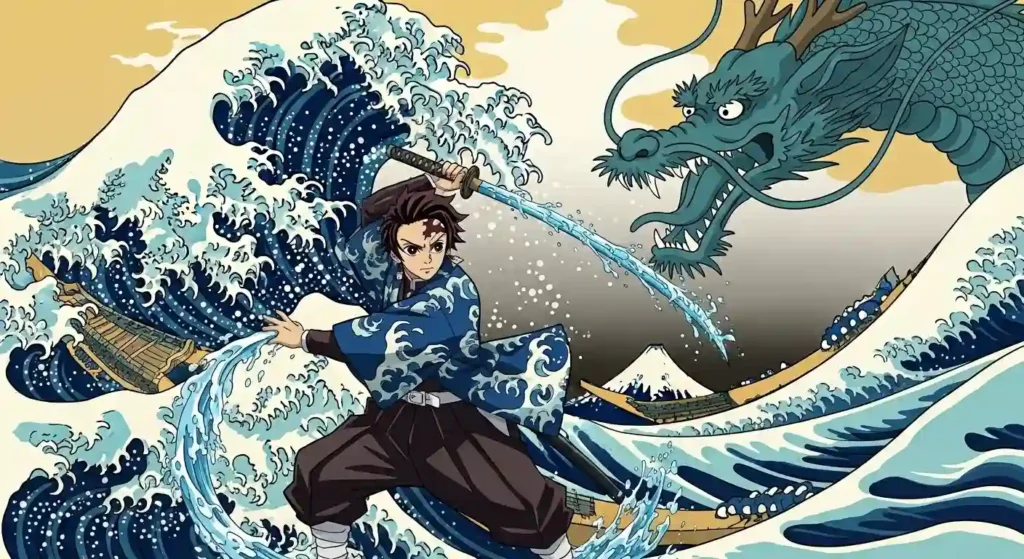
At first glance, it looks like flashy water effects. But visually, the style reflects Ukiyo-e traditions, especially The Great Wave off Kanagawa. The flowing waves, curved lines, and deep blue tones create strong water symbolism and ocean imagery.
The style mimics:
- Rain
- Tidal waves
- Whirlpool motion
- The rising shape of a Japanese water dragon
Each form reflects not just power but mental clarity.
The Complete 11 Forms of Water Breathing
First Form – Water Surface Slash
A clean horizontal slash designed as a decisive decapitation strike.
Simple. Direct. Effective.
- Manga chapter debut: Chapter 7
- Anime episode debut: Episode 4
This form teaches control over katana combat basics.
Second Form – Water Wheel
A midair spinning attack delivering a vertical slash. It combines agility and rotation.
Tanjiro later improved it with a horizontal variation, showing early advanced sword techniques development.
Third Form – Flowing Dance
This is where true grace appears. The user bends and glides in seamless fluid movement, unleashing sweeping cuts in a circular rhythm.
Its beauty hides deadly precision.
Fourth Form – Striking Tide
Multiple consecutive slashes in rapid succession.
The improved version increases speed and accuracy, turning it into a controlled barrage attack.
Perfect for chaotic battles against Lower Rank demons.
Fifth Form – Blessed Rain After the Drought
This form is unique. It is a gentle mercy kill meant for demons who surrender.
Demons like Demon A, Demon B, Demon C, and Demon D described it as painless.
Even the Hand Demon admitted there was no hatred in the strike.
This reflects compassion inside violence.
Sixth Form – Whirlpool
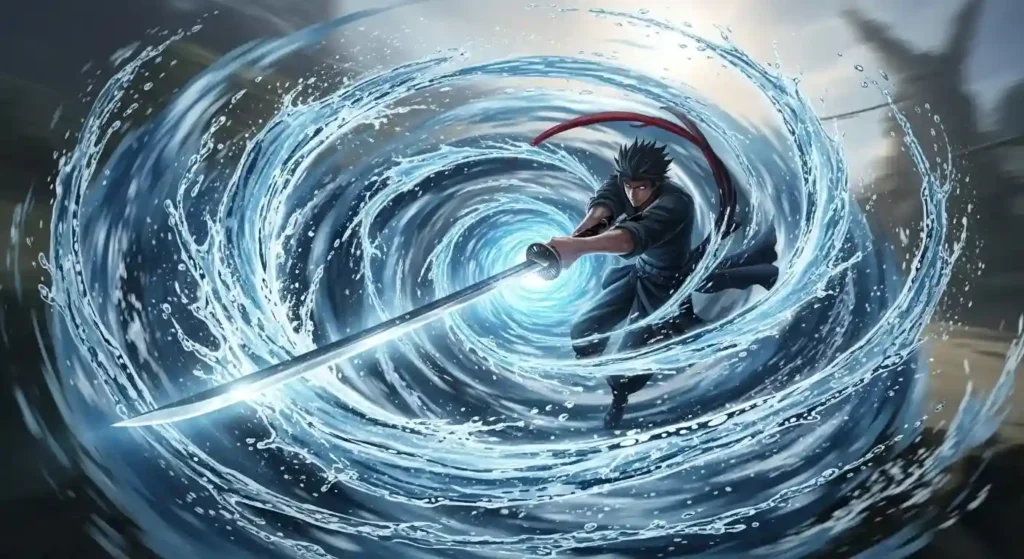
A full-body vortex attack built on powerful whirlpool motion.
It becomes stronger in water, proving its underwater combat efficiency.
Tanjiro later created a hybrid version called Twisting Whirlpool Flowing Water, blending footwork from Flowing Dance for added projectile deflection.
Seventh Form – Drop Ripple Thrust
A precise thrust designed for momentum nullification.
Its upgraded angle variation allows total stopping power — a masterclass in control and defensive stance discipline.
Eighth Form – Waterfall Basin
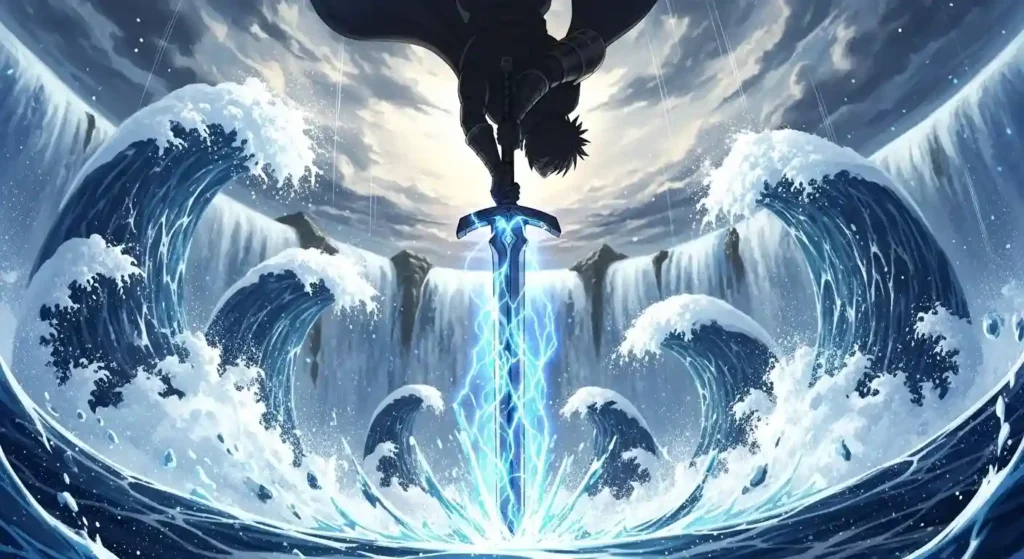
A crushing downward strike using gravity and falling speed.
When executed correctly, it creates the illusion of crashing tidal waves.
Ninth Form – Splashing Water Flow Turbulent
This is pure footwork mastery.
It allows rapid directional shifts that look like a teleportation illusion. Tanjiro used it brilliantly against Kyogai inside the rotating drum room, relying on sharp reflexes and Animalistic Instincts.
It shows extreme battle adaptability.
Tenth Form – Constant Flux
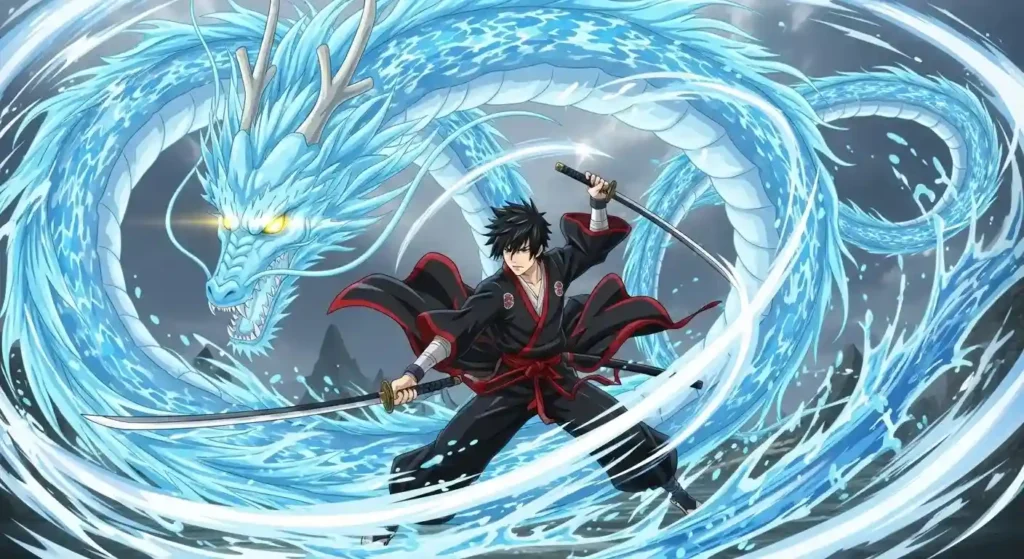
Perhaps the most visually iconic technique.
The user spins repeatedly, building power through momentum generation until a roaring water dragon forms — a clear dragon manifestation.
Tanjiro used it against Rui, a member of the Twelve Kizuki and Lower Rank Five.
Despite its strength, Rui’s Blood Demon Arts overpowered him until he turned to Hinokami Kagura.
The name links to Seisei Ruten, the concept of constant flow in life.
Eleventh Form – Dead Calm
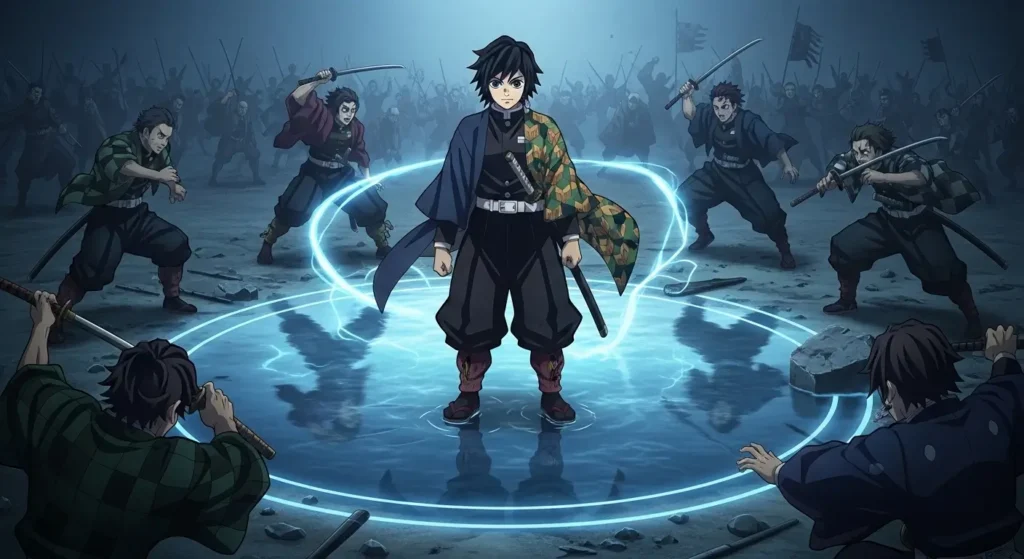
Created by Giyu Tomioka, this is the peak of Water Breathing.
The user enters a tranquility state, minimizing motion and countering everything with invisible speed.
It is the ultimate defensive technique.
However, overwhelming force from Upper Rank demons can still break through.
Water Breathing vs Other Styles
Against Sun Breathing
Water is adaptable. Sun is explosive.
Tanjiro eventually transitions toward Hinokami Kagura, but Water remains his foundation.
Against Insect Breathing
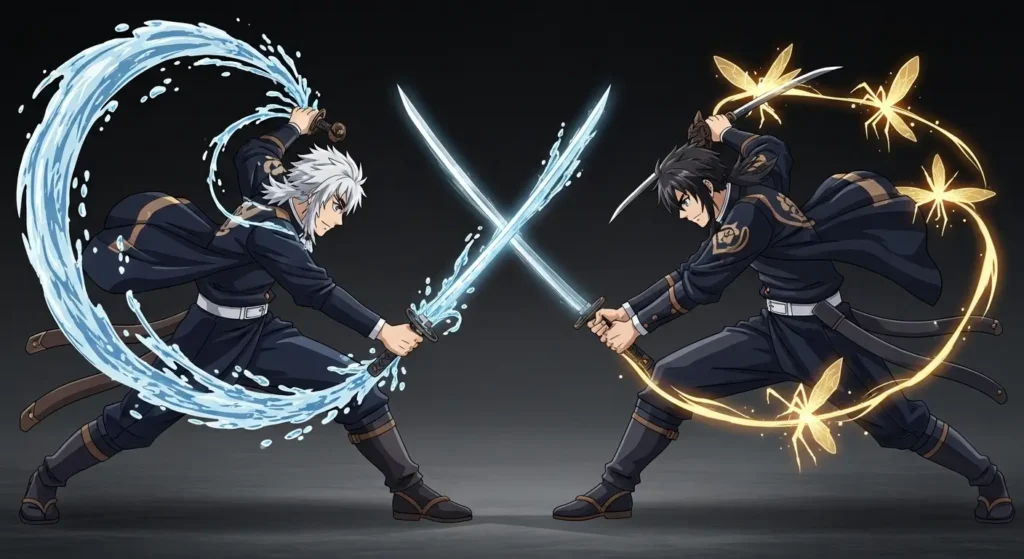
Water and insect users combine in Dancing Waters’ Allure and The Brilliant and the Brave, showing effective combination attack and symmetrical strike coordination.
Game Exclusive Techniques
In games and spin-offs, we see additional moves like:
- Cheer
- Max Potential
- Pride of a Demon Slayer
- Grit of a Demon Slayer
- The Essence of a Water Hashira
- Tyrannical Teaching (from Kimetsu Academy)
These expand personality and humor while maintaining the spirit of Water Breathing.
Iconic Battles That Defined the Style
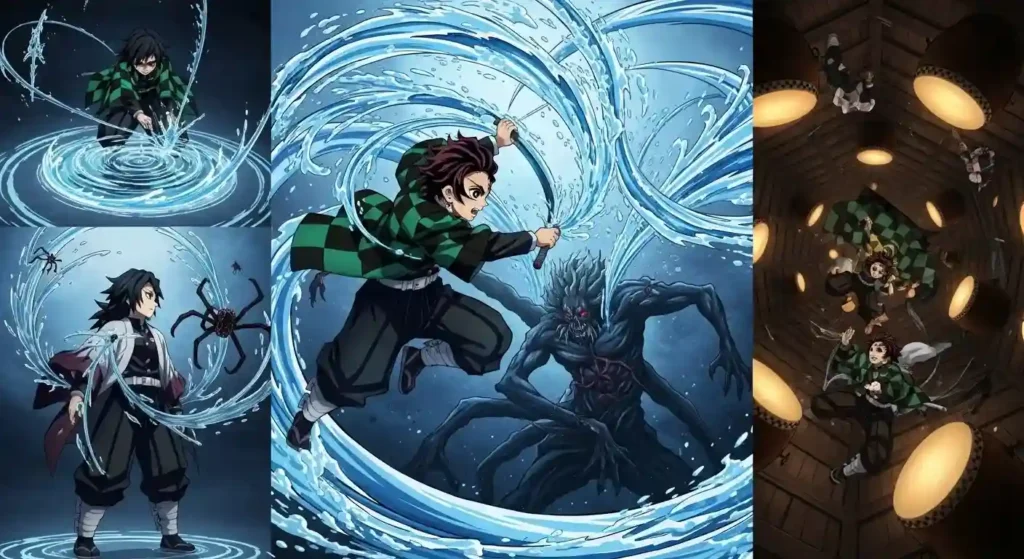
- Tanjiro vs Swamp Demon
- Tanjiro vs Kyogai
- Tanjiro vs Rui
- Giyu vs Rui using Dead Calm
In films like Demon Slayer: Mugen Train and upcoming arcs such as Demon Slayer: Infinity Castle, Water Breathing remains relevant.
The Emotional Core of Water
Water Breathing is not just about combat.
It reflects:
- Calm under pressure
- Emotional restraint
- Flow instead of resistance
Even demons like Swamp Demon and unnamed entities such as Demon E reacted differently when struck by its calm nature.
It teaches that strength does not need rage.
Why Water Breathing Endures
Despite flashier styles, Water Breathing remains essential because it offers:
- Strong fundamentals in swordsmanship
- Balanced offense and defense
- Strategic hybrid form evolution
- High adaptability
- Pathway to advanced sword techniques
Within Hashira ranking, Giyu proves its top-tier potential.
Final Thoughts
From the legacy of Yoriichi Tsugikuni to the quiet strength of Giyu Tomioka, and the growth of Tanjiro Kamado, Water Breathing remains a symbol of resilience.
It flows like life itself — always moving, always adapting.
And as long as demons exist within the world of Demon Slayer: Kimetsu no Yaiba, the sound of rushing water will echo through battle.